LOADING BREAKS...
← Back to Artists

DiscoEarly Hip-HopMobile DJParty BreaksFunkUSA1970s-1992
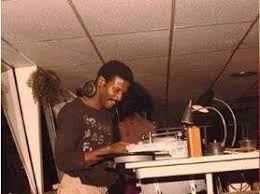
Grandmaster Flowers was a Brooklyn DJ whose name survives as one of the key prehistory markers of hip-hop DJ culture. He is usually placed among the earliest New York selectors to develop long-form, continuous mixing for dancers, at a moment when disco, funk, street parties and mobile sound systems were beginning to overlap.
Although he is less documented than later Bronx pioneers, Flowers is regularly cited in oral histories and retrospective writing as an important bridge figure between disco deejaying and the techniques that would become central to hip-hop. His reputation rests less on a conventional discography than on his role in shaping how records were played, sequenced and presented in public.
He was associated with Brooklyn, New York, and with the mobile DJ movement that brought powerful sound systems into community spaces, block parties and local events. That setting matters: before hip-hop was formalised as a culture industry, DJs built reputations through neighbourhood circulation, equipment, exclusives, microphone presence and the ability to keep a crowd locked in for hours.
Flowers is often described as one of the earliest DJs to mix records together in sequence rather than treating each record as a separate stop-start event. In practical terms, that meant extending momentum across a night, smoothing transitions and creating a more immersive dance-floor experience. Those methods were foundational for later club and street DJ practice alike.
His sets appear to have drawn from disco, funk and other dance records circulating in New York in the 1970s. In that period, the boundaries between disco DJ culture and the emerging language of break-based party music were still porous, and Flowers belongs to that fluid zone where technical experimentation preceded strict genre identity.
He is also remembered for helping establish the title "Grandmaster" in DJ culture. Later figures would make the honorific globally famous, but Flowers is widely referenced as an early and influential bearer of it, which speaks to the esteem he commanded in his local circuit.
Because so much of his activity took place in live settings rather than through commercial releases, his historical footprint is partly fragmentary. That has made him a somewhat elusive figure in comparison with artists whose careers were documented by records, radio archives or major media coverage. Even so, his name continues to recur in serious accounts of New York DJ history.
In discussions of early hip-hop, Flowers is often positioned alongside the broader ecosystem that produced Kool Herc, Grandmaster Flash and other foundational DJs, even if his path emerged from a slightly different angle. He represents an earlier or parallel stage in which disco mixing, mobile sound culture and neighbourhood party technique were converging.
That placement is important for understanding the wider genealogy of breakbeat culture. The idea of controlling energy through sequencing, transitions and system power is not only a hip-hop story; it also feeds directly into later club practices across house, jungle, garage, breaks and bass music. Flowers belongs to that deeper lineage of DJs who changed the grammar of recorded music in public space.
He died in 1992, and much of his legacy has been preserved through historians, journalists, scene memory and retrospective scholarship rather than through a large official catalogue. As a result, writing about him requires caution, but the broad outline is consistent: he was an early New York master of continuous party mixing and a significant precursor to hip-hop DJing.
For Optimal Breaks, Grandmaster Flowers matters not because he fits neatly into later genre boxes, but because he stands near the root of modern DJ logic. The continuous mix, the mobile rig, the neighbourhood dance floor and the elevation of the DJ as central cultural operator all form part of his historical terrain.
His place in the archive is therefore foundational. Even with limited surviving documentation, Grandmaster Flowers remains one of the names that helps explain how disco-era technique, street-level sound practice and early hip-hop innovation became part of the same story.
RELATED ARTISTS

