LOADING BREAKS...
← Back to Artists

BreakbeatHip-HopOld SchoolFunkSoulParty BreaksUSA1970s-present
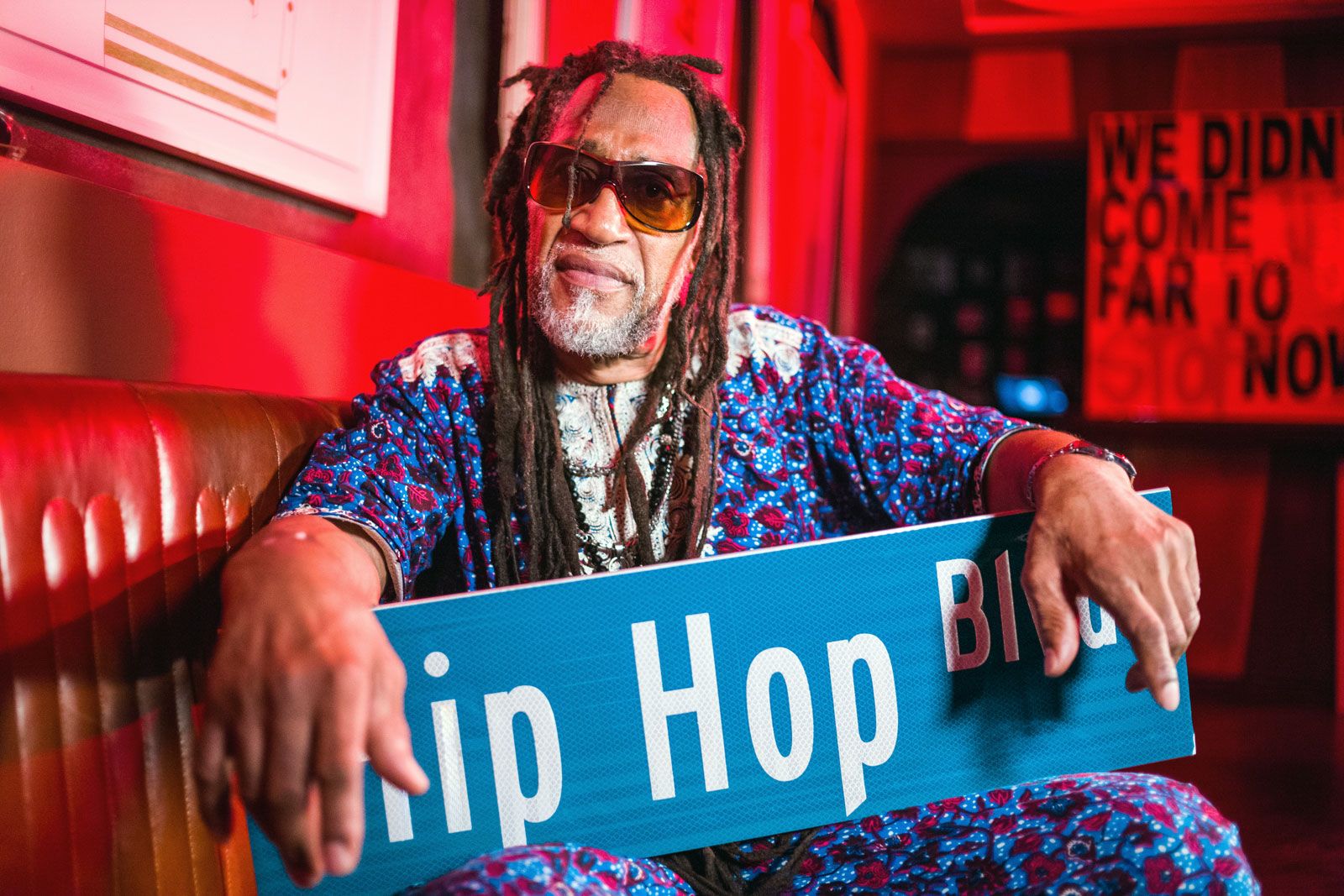
DJ Kool Herc is one of the foundational figures in modern DJ culture and is widely associated with the birth of hip-hop in the Bronx during the early 1970s. Within the wider history of breakbeat culture, his importance is structural: he helped establish the idea that the most explosive part of a record could be isolated, extended and turned into the center of a dance event.
Born Clive Campbell in Kingston, Jamaica, he later moved to New York and grew up in the Bronx. That Jamaican background matters in any serious account of his work, not as a simple origin story but as part of the sound-system logic that informed his approach to amplification, selection and crowd control.
At a time when neighborhood parties, community rooms and school events were crucial social spaces, Herc emerged as a commanding DJ presence. His parties became known for volume, physical impact and a selector's instinct for what moved dancers, especially the percussive passages that sent the floor into a different state.
The key innovation most closely associated with him is the extension of the break. Using two copies of the same record and moving between turntables, he developed a way of repeating the drum-heavy sections that dancers responded to most intensely. That method became a cornerstone not only of hip-hop DJing but of later breakbeat-based music more broadly.
His so-called merry-go-round technique also reflected a deeper musical intelligence. Rather than treating records as fixed songs, Herc treated them as raw material for live recomposition, linking fragments from funk, soul and Latin-leaning dance records into a continuous rhythmic experience.
The dancers who responded most strongly to those extended breaks would become central to the emerging b-boy and b-girl culture. In that sense, Herc's practice did not just produce a DJ style; it helped define a whole ecosystem in which DJ, MC, dancer and crowd developed together.
He is also closely linked to the early use of MCs in a party-setting role around the DJ. The vocal element in Herc's orbit was still far from the later commercial form of rap, but the framework was there: spoken hype, rhythmic exhortation, crew identity and the shaping of a live event through voice as well as records.
Unlike later generations whose careers were documented through formal releases, Herc's historical importance rests primarily on live practice, oral history and scene memory. That can make his discography look comparatively thin, but it also underlines a crucial point: some of the most decisive innovations in Black music culture happened first in rooms, parks and community spaces, not in the conventional recording industry.
His influence extends far beyond old-school hip-hop. The logic of isolating and extending breaks became fundamental to sampling culture, turntablism, electro, big beat, jungle, hardcore and multiple strands of club music that built themselves from drum passages and loop-based energy.
For breakbeat history in particular, Herc stands at the headwaters. Even where later scenes developed independently in musical terms, the core idea that the break could be the engine of the night traces back to the kind of experimentation he made visible in the Bronx.
His name is often invoked alongside other early architects such as Afrika Bambaataa and Grandmaster Flash, but Herc's role remains distinct. He is commonly framed as the figure who identified the break as a social and musical focal point and proved its power in front of a live crowd.
In later decades he has been recognized in documentaries, interviews and historical retrospectives as a foundational cultural figure rather than simply a veteran DJ. That recognition reflects not just nostalgia but an understanding that entire musical lineages, including breakbeat culture as documented by sites like Optimal Breaks, begin with the shift in listening and mixing that he helped set in motion.
His legacy is therefore larger than any single track or release. DJ Kool Herc occupies a primary place in the genealogy of break-led music: a Jamaican-born Bronx innovator whose party techniques changed the language of rhythm, dance and DJ performance across the world.
RELATED ARTISTS

