LOADING BREAKS...
← Back to Artists

Hip-HopElectroBreakbeatOld SchoolMiami BassUSAlate-1970s-2000s
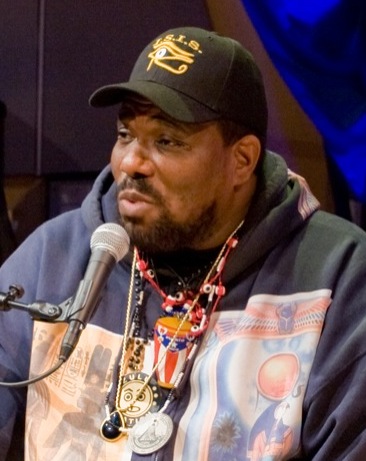
Afrika Bambaataa is one of the foundational figures in hip-hop culture and a key bridge between early Bronx DJ practice, electro, and the wider breakbeat continuum. Emerging from the South Bronx in the 1970s, he became known not only as a DJ and recording artist but also as an organizer whose influence extended across music, dance, style, and scene-building.
His early importance is tied to the first generation of Bronx DJs who helped define hip-hop as a culture rather than a single sound. Alongside other central names from that formative period, Bambaataa developed a reputation through parties, park jams, and a broad musical approach that drew from funk, soul, rock, Latin records, and percussive break sections prized by dancers.
A crucial part of his historical role was his connection to the Zulu Nation, which became one of the most visible organizational frameworks around early hip-hop. Through that network, Bambaataa helped articulate a vision of the culture that linked DJing, MCing, breaking, and graffiti, and that gave the emerging scene a language of collective identity.
As a DJ, he was especially associated with eclectic selection and with a willingness to move beyond strict genre boundaries. That openness mattered in the transition from block-party hip-hop to recorded forms that could travel internationally. His sets and productions helped establish a route from funk breaks and party records toward machine-driven electro.
That shift became definitive with "Planet Rock," the 1982 recording most closely associated with his name. Built around drum-machine programming and a futuristic electronic palette, the track became one of the decisive records in the history of electro and early hip-hop. Its impact reached far beyond rap, feeding directly into breakdance culture, club music, freestyle, Miami bass, techno, and later strands of breakbeat.
The importance of "Planet Rock" also lies in how it reframed what hip-hop production could sound like. Instead of relying only on live-band funk templates, it embraced synthesizers and a more mechanical rhythmic architecture. In doing so, Bambaataa and his collaborators helped open a path that many later producers in electro, bass, and rave-adjacent scenes would follow.
He followed that breakthrough with other significant recordings from the same period, including "Looking for the Perfect Beat" and "Renegades of Funk." Those records reinforced his role in shaping electro-rap as a durable form rather than a one-off experiment, and they circulated widely in DJ culture well beyond the United States.
Bambaataa's discography also reflects a pattern of collaboration. The Soulsonic Force was central to his best-known work, and later projects connected him with artists from outside rap's original orbit. That cross-scene instinct helped position him as a figure who could move between hip-hop, electro, club music, and more hybrid pop-facing contexts.
In the 1980s he became an important ambassador for hip-hop outside New York. His records, tours, and media presence contributed to the international spread of the culture at a time when breakdancing, electro beats, and early rap performance were becoming visible across Europe and beyond. For many listeners outside the Bronx, his work was among the first clear entry points into hip-hop's sonic language.
For breakbeat history, Bambaataa matters not only because of his place in hip-hop's first wave, but because his records became raw material for later dance scenes. "Planet Rock" in particular remained a reference point for b-boys, electro revivalists, Miami bass producers, UK breakbeat artists, and generations of DJs working with stripped, syncopated drum programming.
His later catalog moved through different club-oriented directions, including material that touched electro-funk and bass-heavy dance forms. Not every later release carried the same historical weight as his early 1980s work, but his name remained strongly associated with the foundational moment when hip-hop, electronic rhythm programming, and breakdance culture fused into a new musical language.
Any serious account of Bambaataa's legacy also has to acknowledge the major allegations of sexual abuse that emerged publicly in the 2010s. Those allegations profoundly damaged his standing and have led to sustained re-evaluation of his place in cultural history. As a result, his historical importance as an architect of early hip-hop and electro is now discussed alongside the gravity of those accusations and their consequences for how his legacy is understood.
Even with that necessary critical context, his musical role in the formation of breakbeat-oriented dance culture remains substantial. He helped move the break from funk source material into a new electronic framework, and in doing so shaped a lineage that runs from early hip-hop and electro to later bass music traditions.
Within the broader story of breakbeat, Afrika Bambaataa stands as a pivotal, complicated figure: a Bronx originator whose recordings helped define the vocabulary of electro and whose influence can still be heard wherever syncopated drum-machine rhythms, DJ science, and futurist street music intersect.
ESSENTIAL TRACKS
Planet Rock
Looking for the Perfect Beat
Renegades of Funk
Unity
Reckless
KEY RELEASES
Planet Rock (1982)
Seminal electro-hip-hop single with Soulsonic Force
Looking for the Perfect Beat (1983)
Key early electro follow-up
Renegades of Funk (1983)
One of his defining recordings of the electro-rap era
Unity (1984)
Collaborative anti-violence single
Reckless (1984)
Club and breakdance-era staple
RELATED ARTISTS

