
Breakbeat Alliance
VIEW FULL PROFILE

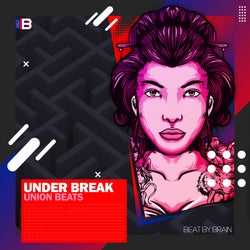
Under Break is a name that surfaces in breakbeat-oriented playlists, mixes and track credits where nu skool breaks, bass pressure and club-forward drum programming are the common…
Xclubsive Recordings is a Spanish label associated with the broad bass music field, with a catalogue that moves through breakbeat, dubstep, glitch hop, drum & bass and electro. Within that spectrum, it is especially relevant to breakbeat listeners as a platform tied to contemporary Iberian club sounds and to producers working in the orbit of nu skool breaks and related hybrids.
Available label profiles consistently place its launch in 2013. Even when detailed founding history is not widely documented, the label appears as part of the post-2000s Spanish ecosystem that kept breakbeat and adjacent bass styles circulating after the peak commercial visibility of the genre, using digital distribution as its main channel.
Its editorial identity is not limited to a single BPM range or a rigid purist line. Instead, Xclubsive Recordings presents itself through the language of bass music, a framing that fits the way many independent labels in Spain and elsewhere navigated the overlap between breakbeat, electro-leaning club tracks, heavier low-end styles and festival-oriented crossover material.
That flexibility matters in scene terms. Rather than representing only one micro-genre, the label seems to have functioned as a home for producers moving between breakbeat structures, rave references and more modern bass production techniques. In that sense, it reflects a period when genre borders were porous and labels often served DJs who needed usable club tracks more than strict stylistic orthodoxy.
Among the names most visibly associated with the label are Breakbeat Alliance, New School Yoni and Hellen Prisma. The available release trail also points to artists such as Under Break, Vazteria X and Alex Wicked, suggesting a roster connected to Spanish and European breakbeat-adjacent circuits rather than a single tightly closed camp.
The label's public-facing catalogue on download platforms highlights titles such as Breakbeat Alliance's Back To The Old Skool and Rave Culture, alongside releases like New School Yoni's Cubillo and Hellen Prisma's In The Air. Even from those titles alone, the programming suggests a dialogue between old-school rave memory and updated production values aimed at contemporary dancefloors.
For Optimal Breaks, the label's importance lies less in a single canonical release than in its role as a continuing outlet for breakbeat-compatible bass music during the digital era. It belongs to the network of imprints that helped sustain a listening and DJ culture around breaks after the format had become more fragmented across online stores, streaming platforms and social media channels.
Its relationship to breakbeat is therefore practical as much as historical. Xclubsive Recordings helped circulate tracks for DJs and listeners who still followed Spanish breakbeat culture while also accepting the broader bass music vocabulary that came to define many independent labels in the 2010s.
The available evidence also suggests a release rhythm extending well beyond its founding period, with later catalogue activity visible through social media and download-store listings. That points to a label identity based on continuity rather than a short-lived burst tied to one local moment.
In retrospective terms, Xclubsive Recordings can be understood as part of the infrastructure that kept Spain's breakbeat-adjacent underground active in the digital marketplace: not a museum piece, but a working imprint shaped by crossover club utility, bass pressure and the long afterlife of the breakbeat scene.