Passenger was a UK breakbeat label closely associated with Aquasky and with the late-1990s to mid-2000s evolution of the breaks scene. In discographies and DJ culture it is usually remembered as a home for chunky, club-focused breakbeat that sat between big beat energy, bass-heavy funk and the more streamlined end of nu skool breaks.
The label appears to have begun in the second half of the 1990s, with 1997 commonly cited as its starting point. Early references also connect it to Polydor as a sublabel or affiliated imprint before a later relaunch, which places Passenger in an interesting position between major-label infrastructure and a scene-facing breakbeat identity.
Its strongest association is with Aquasky, whose role was central to the label's profile. Sources around the label describe Passenger as Aquasky's breaks platform, and later activity is often linked specifically to Brent Newitt from the duo. That close overlap gave the catalogue a coherent editorial line rather than the feel of a loose compilation imprint.
Passenger's core sound was built for DJs: rolling breakbeats, heavy low end, funk samples, electro touches and a direct club sensibility. It belonged to the strand of UK breaks that valued impact and movement without losing the craft of arrangement, and it helped define a period when breakbeat 12-inches were a regular part of cross-scene sets.
The catalogue is especially associated with Aquasky releases, but it also intersected with artists from the wider breaks network. Names such as Breakfastaz, Rob Le Pitch and collaborations involving El Hornet point to a label operating within a broader circuit of producers, remixers and DJs who moved between breakbeat, bass music and adjacent club styles.
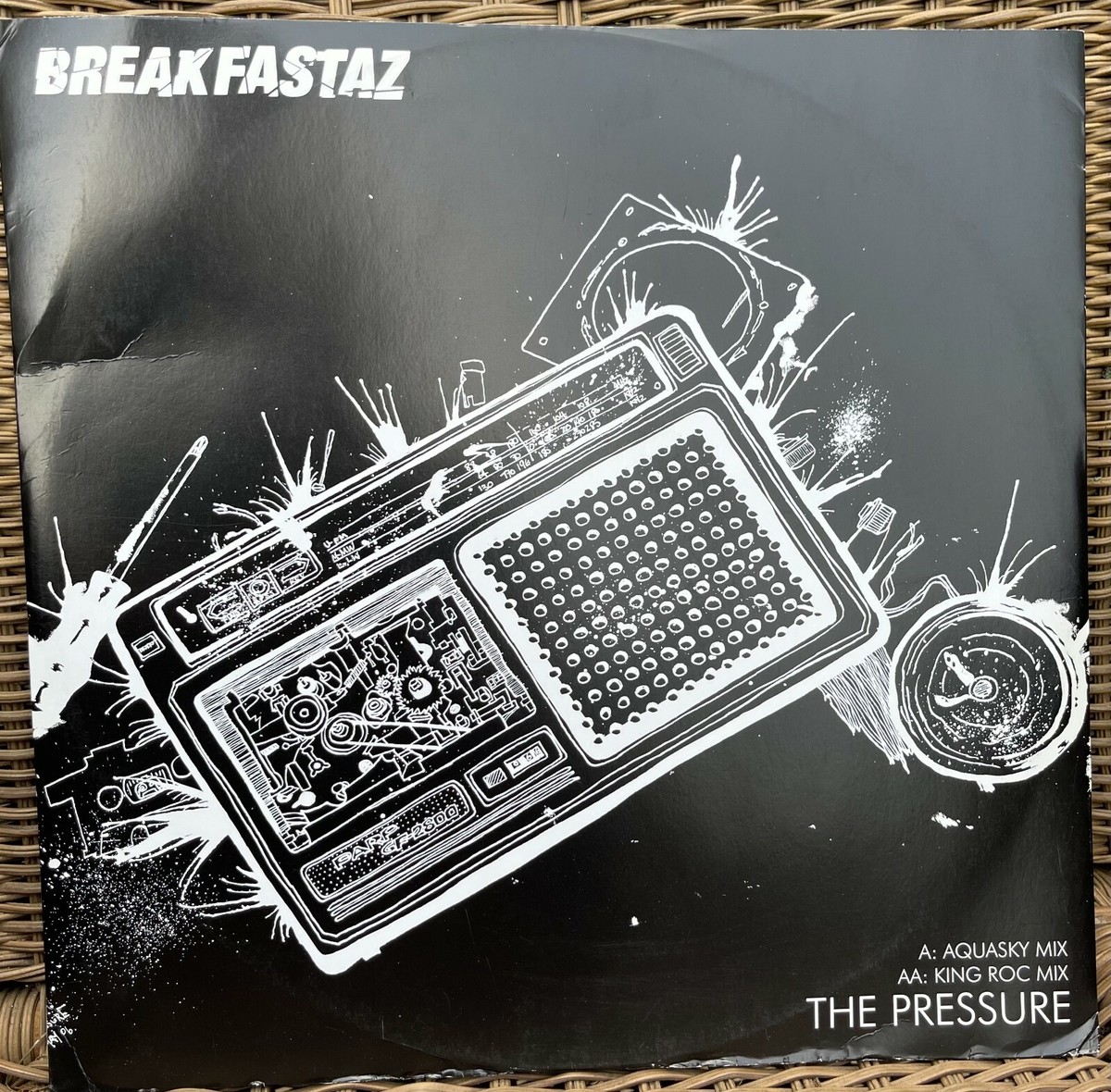
Representative titles linked to Passenger include Aquasky's Breakbeat Bass, the Time Up EP and Teamplayers EP, as well as Breakfastaz's Pressure Remixes and Rob Le Pitch's Twisted. These releases reflect the label's practical role as a vehicle for floor-ready material rather than a purely album-oriented brand.
In historical terms, Passenger belongs to the era when UK breakbeat had a visible specialist infrastructure: labels, record shops, magazine coverage, DJ charts and club nights all feeding one another. Passenger was one of the imprints that helped sustain that ecosystem, giving producers a recognisable outlet and DJs a dependable source of new weapons.
Its relationship to breakbeat is direct, but the label also sits near the edges of big beat's aftermath and the rise of nu skool breaks. That positioning matters: Passenger was part of the shift from the broader crossover success of 1990s breakbeat toward a more specialist, DJ-led culture in the 2000s.
The label's identity was not based on stylistic eclecticism for its own sake. Instead, it maintained a fairly clear lane within the breaks continuum, favouring muscular rhythms, bass pressure and tracks designed to work in clubs and on mix CDs. That consistency is one reason it remains easy to place within the period's scene map.
Passenger is best understood not as a mass-market imprint but as a functional and respected node in UK breakbeat culture. Its legacy rests in the way it channelled Aquasky's orbit, documented a specific phase of the breaks sound, and contributed to the infrastructure that kept the genre moving through the 2000s.