
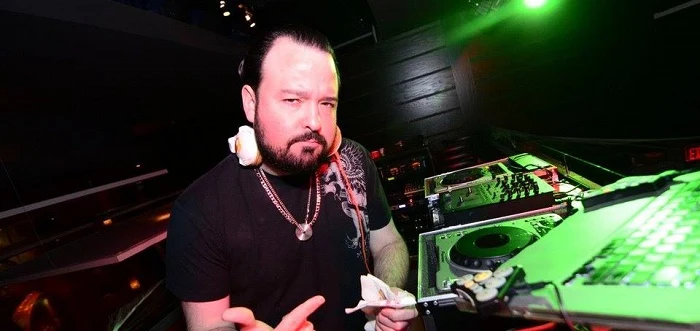
DJ Keoki
VIEW FULL PROFILE


DJ Icey is an American DJ, producer and remixer widely associated with the rise of Florida breaks and with the broader US breakbeat continuum that developed alongside UK hardcore…

The Crystal Method is an American electronic act formed in the early 1990s by Ken Jordan and Scott Kirkland. Emerging from Las Vegas before becoming closely associated with the…

Rabbit in the Moon is a Florida electronic act most closely associated with the US breakbeat continuum, though its sound has always reached beyond a single scene tag. Emerging…

DJ Baby Anne is an American DJ and producer closely associated with the Florida breaks continuum and the wider US bass scene. Emerging at a moment when regional breakbeat cultures…
Huda Hudia is a producer and DJ closely associated with the US breaks continuum, particularly the Atlanta circuit that helped sustain and popularise breakbeat beyond its first…
Moonshine Music was a Los Angeles dance label that became one of the most visible North American outlets for rave, club and DJ-mix culture from the 1990s into the 2000s. Its catalogue was broad rather than purist, moving across techno, trance, house, breaks, drum & bass and related electronic styles, but it maintained a strong connection to the breakbeat and bass continuum through both artist albums and compilation culture.
The label is generally associated with the early-1990s expansion of US rave infrastructure, when independent imprints helped translate UK and European club sounds for American audiences. In that context, Moonshine functioned not only as a record label but also as a packaging and distribution platform for scenes that were still consolidating in the US market.
A large part of its identity came from compilations and DJ-mixed releases. Moonshine issued a substantial number of mix CDs and artist-led compilations, a format that was central to club discovery in the pre-streaming era. Those releases helped map connections between local US rave circuits and imported sounds from the UK and continental Europe.
Within breakbeat culture, Moonshine is especially remembered for giving space to harder-edged and big-room strands of US breaks at a time when the style was developing a distinct identity outside the UK. The label's orbit included artists and DJs linked to West Coast and broader American breakbeat scenes, and its releases often sat alongside trance, progressive and drum & bass in record bags and specialist shops.
The catalogue is also tied to DJ Keoki, whose mix albums became part of the label's public profile, and to a wider roster that included figures such as AK1200, Dieselboy and other names associated with US drum & bass circulation. That breadth matters: Moonshine was less a narrowly defined imprint than a hub where several strands of electronic club music could coexist under one editorial umbrella.
For breakbeat listeners, one of the most relevant names associated with the label is DJ Icey. His presence helped connect Moonshine to the Florida and US breaks axis, where electro-funk influences, bass pressure and rave energy were being reshaped into a recognisably American form. In that sense, the label documented a period when US breaks were becoming a market and a scene with its own stars, aesthetics and touring circuits.
Moonshine also operated in the era when the mix CD was a key cultural object: part souvenir, part scene report, part entry point for new listeners. That made the label important beyond individual singles. It helped circulate DJs as brands, codify genre identities for retail bins, and give North American audiences a practical route into sounds that were often club-led and geographically dispersed.
Its relationship to breakbeat was therefore not exclusive but significant. Moonshine did not define the genre in the way a specialist UK imprint might have done, yet it played a real role in the US ecosystem that connected breaks, drum & bass, trance and rave retail culture. For many listeners, especially in North America, the label was a gateway into adjacent bass music worlds.
As the market changed in the 2000s and the CD-driven economy weakened, the label's centrality faded. Even so, Moonshine remains a useful reference point for understanding how electronic music was mediated in the US before streaming: through compilations, branded series, DJ personalities and hybrid catalogues that reflected the fluid boundaries of rave culture.
Its legacy within Optimal Breaks' field lies in that intermediary role. Moonshine Music helped document and distribute a period when American breakbeat culture was growing in dialogue with trance, drum & bass and wider club electronics, and when labels could shape scenes as much through curation and circulation as through strict genre allegiance.