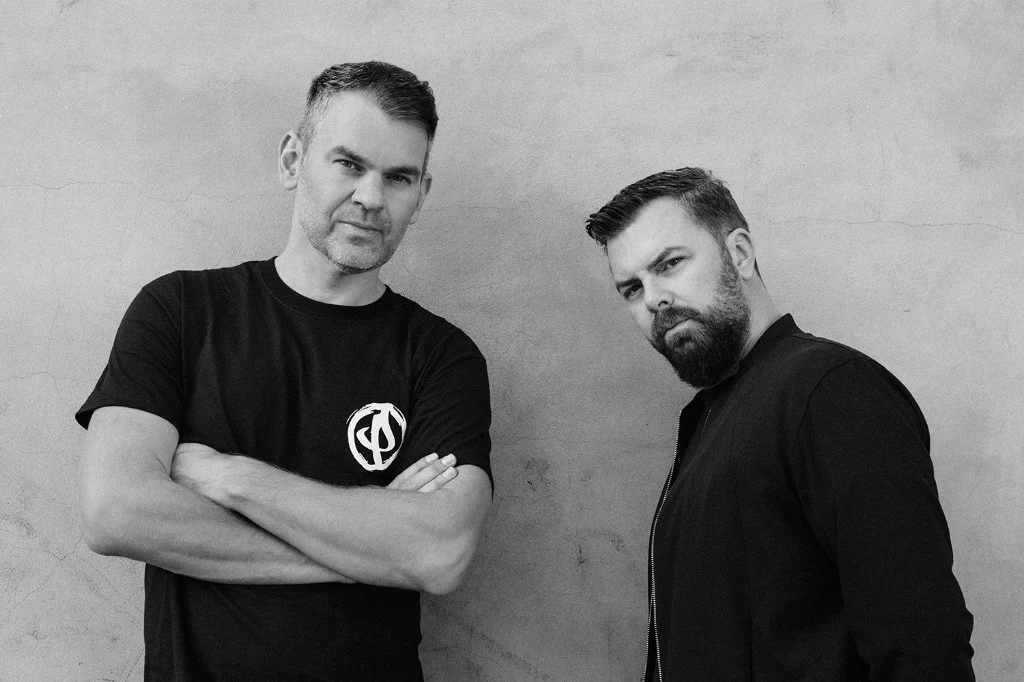
Distinct'ive Records was a UK electronic label closely associated with the late-1990s and 2000s crossover between progressive house, breaks, big beat and adjacent club sounds. Although its catalogue was broader than breakbeat alone, it became an important home for artists who helped define the more musical, cinematic and club-focused end of the breaks spectrum.
Formed in the mid-1990s, the label emerged during a period when British dance music was splintering into specialist scenes while still allowing strong traffic between them. Distinct'ive operated in that overlap: progressive house, trance-adjacent material, breakbeat, electro-leaning cuts and album-oriented electronic acts could all sit within its orbit.
One of the label's best-known associations is with Hybrid, whose work gave Distinct'ive a strong identity among listeners looking for sophisticated breakbeat with orchestral scale, progressive structure and rock-era album ambition. Releases connected to Way Out West and artists such as Ils also helped place the label in a zone where DJ functionality and widescreen production values met.
In breakbeat terms, Distinct'ive mattered because it supported a strand of the sound that was less about raw hardcore lineage and more about polished, dramatic and often melodic club music. That made it a natural reference point for the late-1990s and early-2000s audience around progressive breaks, big beat's more refined aftermath, and the broader festival and superclub circuit.
The label also developed a clearer breaks identity through Distinct'ive Breaks, a dedicated offshoot used for breakbeat-focused releases. That imprint helped organise part of the catalogue for DJs and buyers who followed the style specifically, while reinforcing how central breaks had become to the wider Distinct'ive ecosystem.
Its catalogue moved across formats and functions: 12-inch singles for club play, remixes, artist albums and compilations all played a role. This mattered in an era when labels often acted not just as release platforms but as curatorial hubs linking producers, remix culture, specialist record shops, magazines and club DJs.
Distinct'ive was not limited to one narrow rhythmic formula. Some records leaned toward progressive house with broken-beat propulsion; others sat closer to big beat, electro-breaks or vocal-led crossover dance music. That flexibility is part of why the label remains easy to place in several overlapping histories rather than a single rigid genre box.
For breakbeat listeners, the label's significance lies in how it helped legitimise a more expansive and musically detailed version of the form. Its releases often appealed to DJs who wanted impact without sacrificing arrangement, atmosphere or long-form development, and to home listeners who followed electronic music through albums as much as through singles.
The label's artist network and associated releases also reflect a moment when UK dance music infrastructure still allowed substantial movement between scenes. Progressive house audiences could encounter breaks through Distinct'ive, while breakbeat audiences could follow the same catalogue outward into adjacent strands of electronic club music.
In retrospect, Distinct'ive Records occupies a durable place in the memory of turn-of-the-century electronic music culture. It was not only a label with notable names on its roster, but a useful map of how breaks, progressive dance music and crossover electronic production interacted in Britain during a particularly fertile period.