LOADING BREAKS...

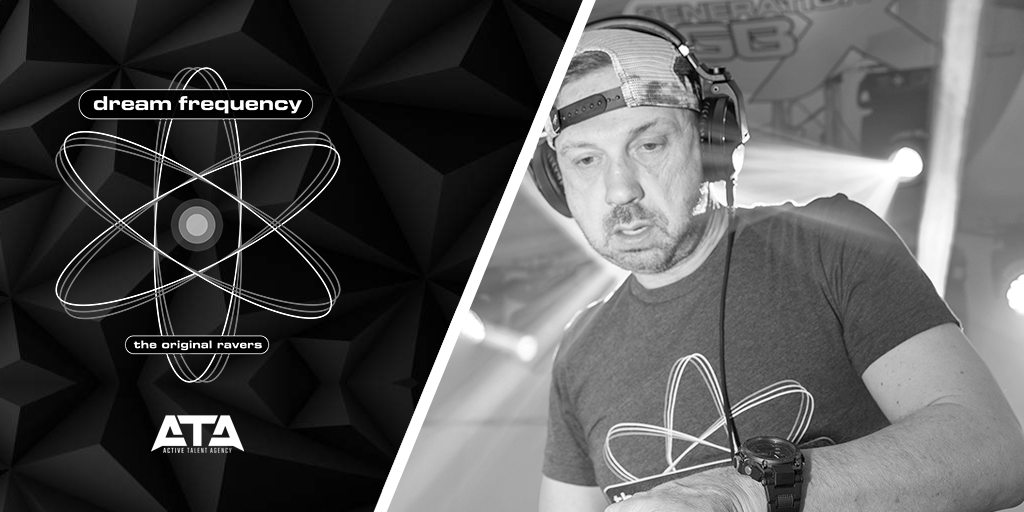
Dream Frequency is an English electronic group associated with the northern rave continuum that linked late-1980s club culture to the early-1990s explosion of UK hardcore, breakbeat and crossover dance music. Formed in Preston, Lancashire, the project is most closely identified with founder Ian Bland and with a strand of British dance production that moved freely between house, techno, piano-led rave and breakbeat energy.
Their emergence belongs to the period when regional UK scenes were helping define the sound of mass-rave culture outside London. In that context, Dream Frequency became part of the wider network of acts translating warehouse intensity into records built for clubs, pirate radio and the fast-moving independent dance market.
What set the group apart was a melodic instinct that sat comfortably alongside tougher rhythmic frameworks. Rather than treating breakbeat, techno and house as fixed categories, Dream Frequency worked in the fluid zone where those forms overlapped, reflecting the open-ended logic of the early rave years.
That flexibility helps explain why the name still resonates across different corners of British electronic music history. They are often remembered not only as a rave act in the narrow sense, but as part of a broader movement that helped establish the vocabulary later inherited by hardcore breakbeat, jungle-adjacent dance floors and UK club hybrids.
The Preston connection matters. Northern England played a decisive role in the spread of rave culture, and Dream Frequency belongs to that geography of regional promoters, DJs, all-night events and local scenes feeding into national circulation. Their records and appearances placed them within a circuit where club functionality and crossover appeal often met.
Across their catalogue, Dream Frequency developed a sound that could accommodate euphoric hooks, driving drum programming and the rush of early-1990s dance-floor dynamics. That balance between uplift and impact made the project legible to house audiences while also connecting with listeners drawn to harder rave and breakbeat structures.
In breakbeat terms, their importance lies less in strict genre purity than in the way they occupied a formative overlap. The early UK rave field was built from constant exchange between imported house and techno, British hardcore acceleration and chopped rhythmic ideas that would later become central to breakbeat culture. Dream Frequency sits convincingly inside that transition.
The group's name has continued to circulate through reissues, retrospective interest and ongoing DJ culture, where early-rave material remains a living reference point rather than a sealed historical chapter. That afterlife has kept Dream Frequency relevant to listeners tracing the roots of UK bass-driven dance music.
Within Optimal Breaks' orbit, the credit has also appeared in recent chart activity through tracks such as "Cry Little Sister" and "Sweet Faith" on Cleveland City, a reminder that the project's identity still connects with contemporary breakbeat and club audiences as well as with rave-era memory.
Dream Frequency's historical place is therefore twofold: a northern English rave group with clear roots in the foundational years of UK dance music, and a name that still makes sense in breakbeat conversation because of how naturally its catalogue bridges house, techno, hardcore momentum and melodic club pressure.
For listeners coming from breakbeat, their work offers a useful route back to the moment before the scene's later subdivisions hardened into separate traditions. In Dream Frequency, those lines are still porous, and that openness is central to their appeal.
Their legacy rests in that connective role: part rave act, part crossover dance project, and part reminder that early UK breakbeat culture emerged from a wider ecosystem of clubs, regional scenes and producers willing to push rhythm, emotion and volume in the same track.