
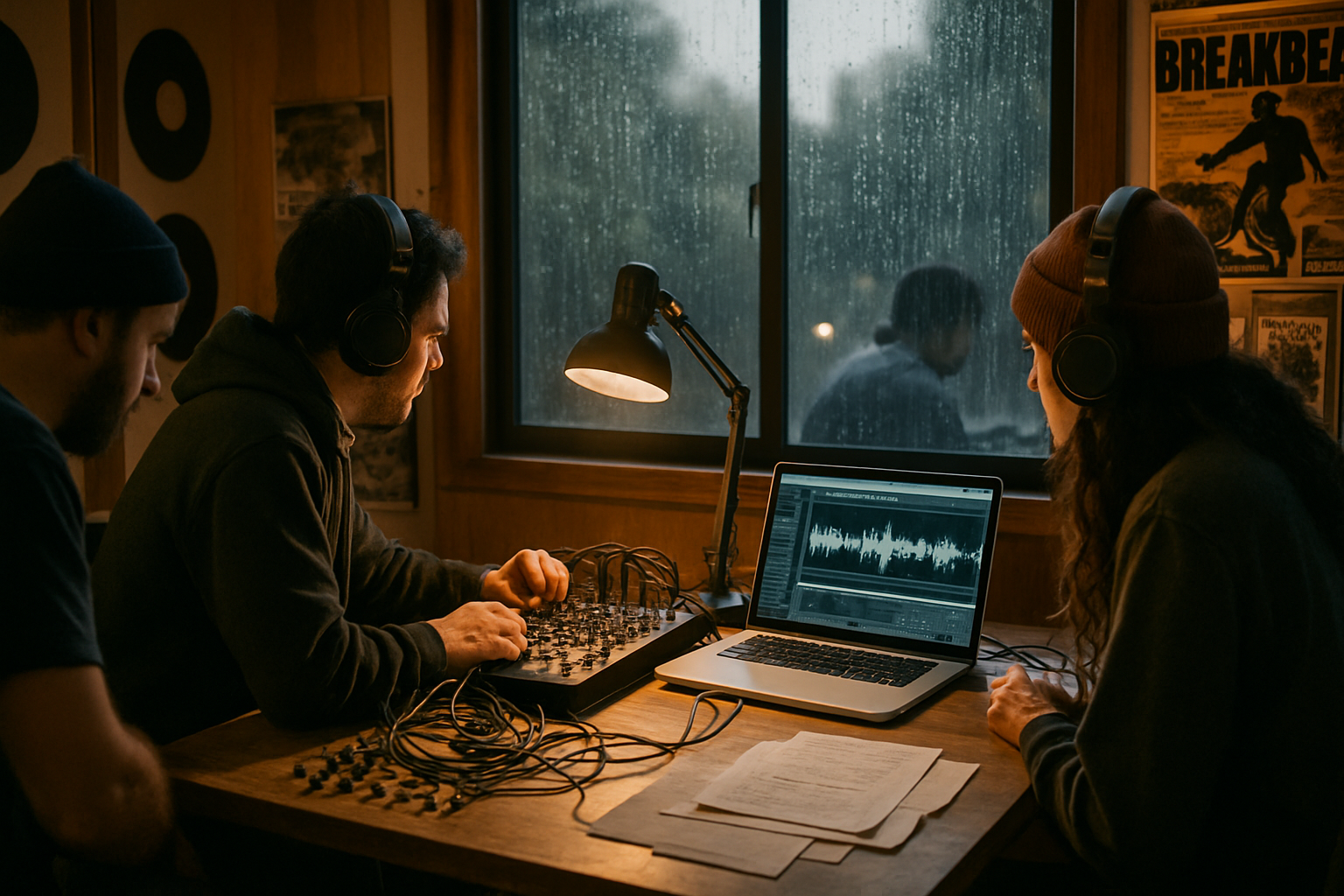
Breakbeat was born partly from cutting, repeating and rearranging existing material. As the scene grew, bootlegs and mashups were not a footnote: they were a circulation strategy, a technical joke and sometimes a rights conflict. Understanding that informal economy explains why the genre always sounded “under construction”.
What separates a bootleg from an official remix
An official remix has permissions, stems or agreements with label and writers. A bootleg often starts in the booth or a home studio: a new layer on a recognisable track, sometimes only to test floor reaction. The line blurred with the internet: shared files, forums, DJ pages. The scene learned to live with legal risk and with instant fame for an unlicensed “summer tune”.
Mashup: humour, tension and collective memory
Merging two worlds —rock and breaks, pop and amen, electro and a vocal from another context— creates instant recognition on the floor. That has social value: shared laughter, surprise or “how did they blend this?”. In breakbeat, where the groove is already hybrid, mashups were fertile ground.
Today: platforms, strikes and archive culture
Platforms changed the rules. What once lived on tape or anonymous MP3 now collides with detection algorithms. Still, the creative logic remains: reorder sonic culture to make new energy. Anyone studying breakbeat cannot ignore that semi-hidden circuit.
Reading on this site
Cross-read this with the History timeline and articles on sampling and rave culture: the bootleg is the conflicted sibling of the canon.