LOADING BREAKS...
← Back to Artists

Breakbeat HardcoreJungleRaggaDrum & BassBreaksUKearly-1990s-present
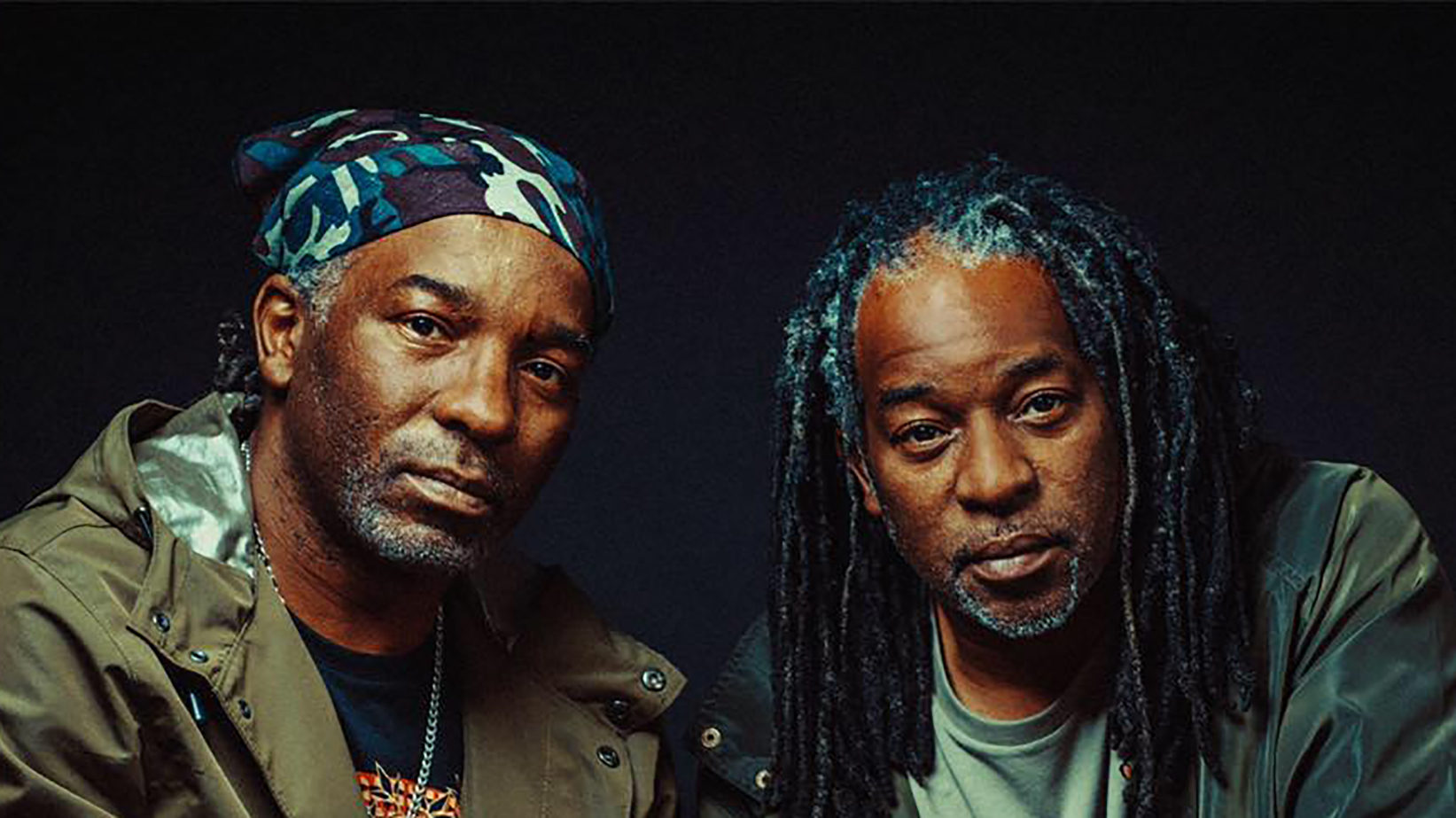
The Ragga Twins are one of the key vocal acts in the transition from UK hardcore into jungle. The duo, associated with London and widely identified as brothers Deman Rocker and Flinty Badman, helped establish a distinctly British fusion of sound-system toasting, dancehall phrasing and breakbeat rave energy at the start of the 1990s.
Their importance lies not only in individual records but in the way they brought Caribbean vocal tradition into the centre of the hardcore continuum. At a moment when pirate radio, warehouse parties and rapidly mutating breakbeat styles were reshaping UK dance music, The Ragga Twins gave that movement a voice that was local, diasporic and unmistakably rooted in London bass culture.
They emerged in the orbit of the early rave explosion, when hip-hop, reggae, sound-system culture and acid house were colliding in new forms. Rather than treating ragga as an external flavour, they made it structural: the MC performance, patois-inflected delivery and call-and-response energy became part of the music's identity.
Their early breakthrough is closely tied to Shut Up and Dance, the label and production camp that played a decisive role in hardcore's rougher, more black British directions. In that environment, The Ragga Twins became central figures, voicing tracks that connected reggae bass pressure with chopped breaks, rave stabs and the speed of the new underground.
The 1991 album Reggae Owes Me Money remains the defining document of that first phase. It is widely regarded as one of the landmark LPs of the hardcore era: not simply a novelty crossover, but a coherent statement of how ragga vocals, breakbeats and UK rave production could function together as a new language.
Tracks such as Shine Eye and Spliffhead are regularly cited when mapping the genealogy from breakbeat hardcore to jungle. They captured the rawness of the period without losing the directness of dancehall performance, and they helped normalise the presence of MC-led ragga vocals in fast breakbeat music.
As the 1990s progressed and jungle became more clearly defined, The Ragga Twins remained strongly associated with the style's formative years. Their work sits alongside the broader movement that linked pirate radio, dubplate culture and rave infrastructure, and it continues to be referenced in discussions of how jungle developed its vocal codes.
They are also notable for longevity. Unlike some acts identified only with the early-rave moment, The Ragga Twins continued to appear across later drum & bass and bass-music contexts, often collaborating with producers from newer generations who recognised their foundational role.
That later activity helped reposition them not as a nostalgia act but as living participants in the continuum. Their voices could still function in contemporary break-led and bass-heavy settings, showing how the energy of early ragga hardcore could be adapted without losing its original force.
In historical terms, The Ragga Twins occupy a crucial place in the black British lineage of breakbeat music. They helped define a vocabulary that connected Jamaican influence, London pirate-radio culture and the accelerated rhythms of UK rave.
Their legacy is especially clear in the many jungle and drum & bass records that followed their template: rugged MC delivery over chopped breaks and sub-bass, with reggae not as decoration but as foundation. For that reason, they remain one of the essential names in any serious account of hardcore's mutation into jungle.
Within the broader breakbeat canon, The Ragga Twins stand as pioneers whose recordings still explain a great deal about the era that produced them. Their catalogue documents a moment when scenes were still being named, boundaries were still fluid, and the future of UK bass music was being built in real time.
ESSENTIAL TRACKS
Shine Eye
Spliffhead
Reggae Owes Me Money
KEY RELEASES
Reggae Owes Me Money (1991)
Debut album and a landmark of ragga-inflected breakbeat hardcore
Shine Eye (1991)
Early signature track from their formative hardcore period
Spliffhead (1991)
Widely cited in discussions of the hardcore-to-jungle transition
RELATED ARTISTS
