LOADING BREAKS...
← Back to Artists

HouseAcid HouseAmbientBreakbeatRavePopUKlate-1980s-1990s
The KLF was the central electronic pop and rave project of Bill Drummond and Jimmy Cauty, a British duo whose work moved between acid house, stadium-scale pop, ambient music and media provocation. Although they are not usually filed strictly inside breakbeat history, their records were deeply entangled with the late-1980s and early-1990s UK dance continuum that also fed hardcore, rave and later bass culture.
The group emerged from the wider conceptual world that Drummond and Cauty had already developed through earlier aliases including The Justified Ancients of Mu Mu and The Timelords. From the outset, their practice combined record-making, myth-building, détournement and a deliberate blurring of underground club logic with mass-market pop strategy.
Geographically, The KLF are associated with Britain, with roots spanning Liverpool and London. That positioning mattered: they arrived at the point where acid house had escaped specialist clubs and pirate radio to become a broader cultural event, and they understood both the language of the underground and the mechanics of national chart culture.
Their early work drew on sample collage, hip-hop cut-up methods and the anarchic spirit of post-punk conceptualism. As the project evolved into The KLF, the sound became more streamlined and more effective on large systems, folding in house pulse, trance-like repetition, rave pianos, dramatic hooks and a sense of scale that made their records work in clubs as well as on radio.
What set The KLF apart was not only their run of major singles, but the way they translated rave energy into a form of pop that still felt strange, coded and self-aware. Tracks such as "What Time Is Love?", "3 a.m. Eternal" and "Last Train to Trancentral" became defining documents of the crossover era when UK dance music was moving from subculture to mainstream visibility.
They also developed a parallel ambient strand, most famously on "Chill Out", which has since been widely discussed as an important early full-length statement in British ambient and journey-like electronic listening. That album showed another side of the duo: less about impact and more about drift, atmosphere and montage.
In scene terms, The KLF belonged to the same broad moment that connected warehouse parties, pirate radio, Balearic after-hours culture and the rapid mutation of British electronic music. Even when their biggest records leaned toward pop spectacle, the production language remained tied to club dynamics: breakdowns, repetition, low-end pressure and the collective release of rave music.
Their relationship to genre was intentionally unstable. One record might push euphoric house and rave, another ambient collage, another a near-parodic pop construction. That instability was part of the point: The KLF treated identity, authorship and even commercial success as material to be manipulated.
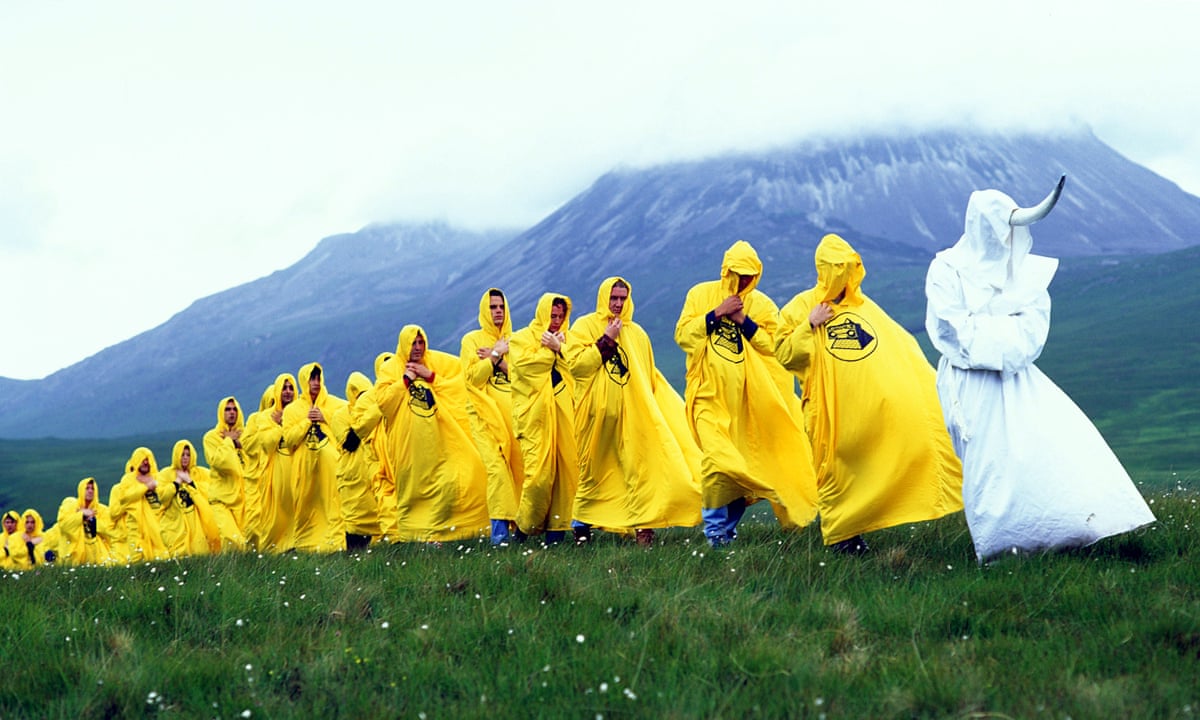
The duo's catalogue is also inseparable from their use of aliases and recurring symbols, which helped create one of the most distinctive mythologies in British electronic music. Rather than presenting a stable artist brand in the conventional sense, they built a shifting narrative universe that linked records, performances, manifestos and public gestures.
By the early 1990s, they had become one of the most visible electronic acts in Britain, but they also staged one of pop's most famous withdrawals, effectively ending The KLF at the height of its profile. That refusal of normal career logic became central to their legacy, reinforcing the sense that the project was as much an intervention into culture as a discography.
For listeners coming from breakbeat, jungle and UK bass histories, The KLF matter less as direct stylistic ancestors than as key architects of the environment in which those scenes expanded. They helped normalize the idea that dance music built from club tools, samples and sound-system logic could dominate public space without surrendering its weirdness entirely.
Their influence can be traced across British rave-pop, conceptual electronic music and the long tradition of artists who treat media strategy as part of composition. The KLF remain a singular case: a duo who turned acid house-era possibility into chart-scale ritual, ambient drift and cultural sabotage, leaving a catalogue that still sits awkwardly and productively between underground history and mass memory.
ESSENTIAL TRACKS
What Time Is Love?
3 a.m. Eternal
Last Train to Trancentral
Justified and Ancient
America: What Time Is Love?
Chill Out
KEY RELEASES
The White Room (1991)
Studio album that gathered the group's best-known crossover material.
Chill Out (1990)
Ambient full-length often cited as a key early British ambient album.
What Time Is Love? (1988)
Signature single with multiple versions across the project's lifespan.
3 a.m. Eternal (1989)
Rave anthem later reworked into a major crossover hit.
Last Train to Trancentral (1991)
One of the defining singles of their peak period.
Justified and Ancient (1991)
Late-period single that extended their pop reach.
LABELS FOUNDED
KLF Communications
RELATED ARTISTS
The Justified Ancients of Mu Mu
The Timelords
Bill Drummond
Jimmy Cauty