LOADING BREAKS...
← Back to Artists

SoulR&BFunkRockQuiet StormDiscoUSA1950s-present
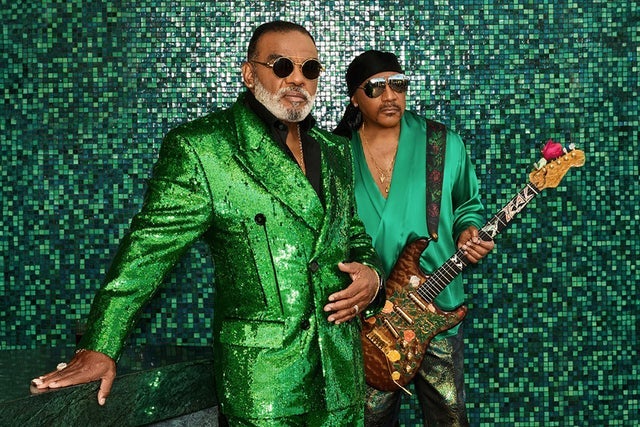
The Isley Brothers are one of the longest-running and most adaptable family groups in American popular music. Emerging from the post-war R&B circuit and remaining active across multiple line-up changes, they built a catalogue that moved from gospel-rooted vocal harmony to soul, funk, rock-inflected grooves and sophisticated quiet-storm balladry.
The group began in the 1950s with brothers O'Kelly, Rudolph and Ronald Isley, first singing in a church-based environment before entering the professional rhythm-and-blues world. Their early years belong to the era when vocal groups moved between gospel, doo-wop and the developing language of rock and roll, and the Isleys were part of that transition rather than standing outside it.
Their breakthrough came with "Shout!," a record whose call-and-response structure and ecstatic build made it durable far beyond its original release period. It established the group as a force in live performance as much as on record, and it remains one of the defining bridges between gospel energy, R&B phrasing and early rock and roll exuberance.
In the first half of the 1960s they continued to record material that connected them to the changing mainstream of Black American pop. "Twist and Shout" became another major title in their songbook, and the group's repertoire from this period shows how fluently they worked within dance-craze pop, vocal-group soul and crossover R&B.
Their association with Motown in the mid-1960s placed them within one of the central institutions of American soul. From that period, "This Old Heart of Mine (Is Weak for You)" became one of their signature recordings, combining Ronald Isley's lead vocal with the concise songwriting and polished production values that defined the label's peak years.
By the end of the decade, the Isleys had moved into a more self-directed phase. "It's Your Thing" announced a new level of artistic and business independence and helped reposition the group within the late-1960s shift toward funkier rhythms, stronger band identity and greater control over repertoire and production.
In the 1970s the group expanded beyond the original vocal trio, with younger family members Ernie Isley, Marvin Isley and Chris Jasper becoming central to the band's sound. That enlarged line-up transformed The Isley Brothers from a vocal group with backing musicians into a fully developed self-contained band capable of moving between hard funk, rock guitar, lush soul and extended album-oriented arrangements.
Albums such as 3 + 3, The Heat Is On, Harvest for the World and Go for Your Guns are central to understanding their mature period. These records showed how comfortably the group could absorb electric rock textures, deep funk basslines and richly arranged slow jams without losing the emotional directness that had defined them from the start.
Songs including "That Lady," "Fight the Power," "For the Love of You" and "Harvest for the World" became touchstones for different sides of their identity. One strand was politically alert and rhythmically forceful; another was sensual, melodic and highly influential on later R&B; another still drew on rock phrasing and guitar-led arrangement in ways unusual for major soul groups of the period.
Their 1980s work kept them relevant in a changing Black pop landscape. "Between the Sheets" in particular became one of the most sampled and reinterpreted recordings in modern R&B and hip-hop culture, giving the group a second life in the sample era and linking their catalogue directly to later generations of producers, rappers and singers.
That afterlife is a major part of their historical importance. The Isley Brothers have been repeatedly revisited by hip-hop, neo-soul and contemporary R&B artists, not only because of recognisable hooks but because their recordings contain durable rhythmic frameworks, harmonic richness and a distinctive atmosphere of intimacy and groove.
Ronald Isley's voice, in particular, became a through-line across decades of stylistic change. Whether in early shout-driven material, classic soul singles, 1970s funk-rock albums or later slow jams, his phrasing gave the group continuity while the surrounding arrangements evolved.
The Isley Brothers also occupy an important place in the history of Black family groups whose internal line-up shifts produced genuine musical reinvention rather than simple brand extension. Few acts moved so convincingly from 1950s R&B to 1970s album funk and then into the sample-based afterlife of modern urban music.
For listeners coming from breakbeat, bass or sample culture, their relevance is not incidental. The Isleys belong to the deep source code of loop-based music: drums, basslines, guitar figures and vocal phrases from their catalogue have circulated widely through hip-hop and adjacent electronic forms, making them a foundational reference point well beyond soul history alone.
Their legacy rests on unusual breadth as much as longevity. The Isley Brothers were not tied to a single era or formula; they repeatedly re-entered the conversation by reshaping their sound while preserving a strong family identity, and their catalogue remains one of the richest bodies of work in American R&B, soul and funk.
ESSENTIAL TRACKS
Shout!
Twist and Shout
This Old Heart of Mine (Is Weak for You)
It's Your Thing
That Lady
Fight the Power
For the Love of You
Between the Sheets
KEY RELEASES
Shout! (1959)
Breakthrough early single
This Old Heart of Mine (1966)
Signature Motown-era album
It's Our Thing (1969)
Marked a more independent phase
3 + 3 (1973)
Key album from the expanded family line-up
The Heat Is On (1975)
Major 1970s funk-soul statement
Harvest for the World (1976)
Socially aware and melodic mid-1970s set
Go for Your Guns (1977)
Included some of their best-known late-1970s material
Between the Sheets (1983)
Highly influential in later R&B and hip-hop sample culture
LABELS FOUNDED
T-Neck Records
RELATED ARTISTS
Chris Jasper
Isley-Jasper-Isley
Jimi Hendrix
Marvin Isley
Ernie Isley