LOADING BREAKS...
← Back to Artists
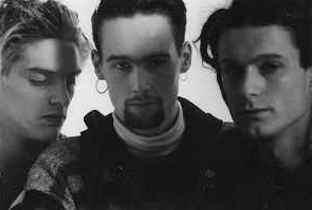

BreakbeatAlternative DanceElectroDubAcid HouseBassUKlate-1980s-1990s
Renegade Soundwave were a British group whose work sat at a crucial junction between post-punk experimentation, sound system culture, early breakbeat and the club mutations that reshaped UK dance music at the end of the 1980s. They are often remembered as one of the acts that helped make bass pressure, cut-up rhythm and studio collage central to British alternative dance.
Formed in London in the mid-1980s, the group emerged from a moment when independent music, hip-hop, dub, industrial textures and imported club sounds were colliding in new ways. Rather than treating those influences as separate scenes, Renegade Soundwave built a language that moved freely between them.
Their early records already pointed toward a hybrid method: heavy low end, sampled fragments, drum-machine propulsion and a rough-edged, urban sensibility that connected as much to warehouse culture as to leftfield rock. In that respect, they belonged to the same wider shift that was dissolving the old boundaries between band and dance act.
The group became associated with the UK’s alternative dance explosion, but their records also spoke directly to DJs, pirate-radio listeners and club crowds who were responding to harder rhythms and more adventurous production. Their music could feel skeletal and dubbed-out one moment, then abrasive, funky or psychedelic the next.
Singles such as "The Phantom" and "Ozone Breakdown" remain among the clearest entry points into their catalogue. Both tracks captured the group’s instinct for break-driven momentum and bass-led tension, while also showing how they could turn experimental studio ideas into club material with real physical impact.
As acid house and rave culture accelerated, Renegade Soundwave were well placed to connect underground dance floors with the broader independent audience. They were not simply following the new club language; they were part of the generation helping define how British acts could absorb sampling, repetition and sound-system weight without losing personality.
Albums including Soundclash and In Dub reflected different sides of that identity. One side leaned toward song form and alternative dance structure; the other foregrounded space, version logic and the deep imprint of dub production. That duality is central to their place in UK dance history.
Their work also gained attention through remixes, an area in which the group’s approach to reconstruction and rhythm made particular sense. In the late 1980s and early 1990s, remix culture was becoming a major creative field in its own right, and Renegade Soundwave were part of that transition from promotional add-on to serious studio practice.
Within the wider map of British bass music, they can be heard as precursors to later developments in breakbeat science, big beat, sample-heavy club music and certain strands of UK bass experimentation. They did not belong neatly to one genre box, which is precisely why their records have remained useful reference points.
Their sound drew on dub not as decoration but as method: subtraction, pressure, echo, fragmentation and the idea that the mix itself could be the composition. That sensibility linked them to a longer lineage running from Jamaican studio practice into British electronic music.
By the 1990s, the group’s catalogue had already marked them out as a distinctive presence from the pre-hardcore and early rave era, even if they were never reducible to those scenes alone. They occupied a space where indie, club culture and bass experimentation overlapped before those categories were fully stabilized.
Renegade Soundwave’s legacy rests less on mainstream canonization than on their role as connectors. They helped show that breakbeat, dub weight, sampling and alternative attitude could coexist in a coherent British form. For listeners tracing the roots of UK bass culture beyond the most obvious histories, their records remain an important part of the story.
ESSENTIAL TRACKS
The Phantom
Ozone Breakdown
Probably a Robbery
Biting My Nails
Kray Twins
KEY RELEASES
The Phantom (1989)
Breakbeat-led single closely associated with the group's club impact
Soundclash (1989)
Debut album
In Dub (1990)
Dub-focused album reworking their material
Howyoudoin? (1992)
Later studio album
Biting My Nails (1990)
One of their better-known singles from the early 1990s
RELATED ARTISTS


