LOADING BREAKS...
← Back to Artists
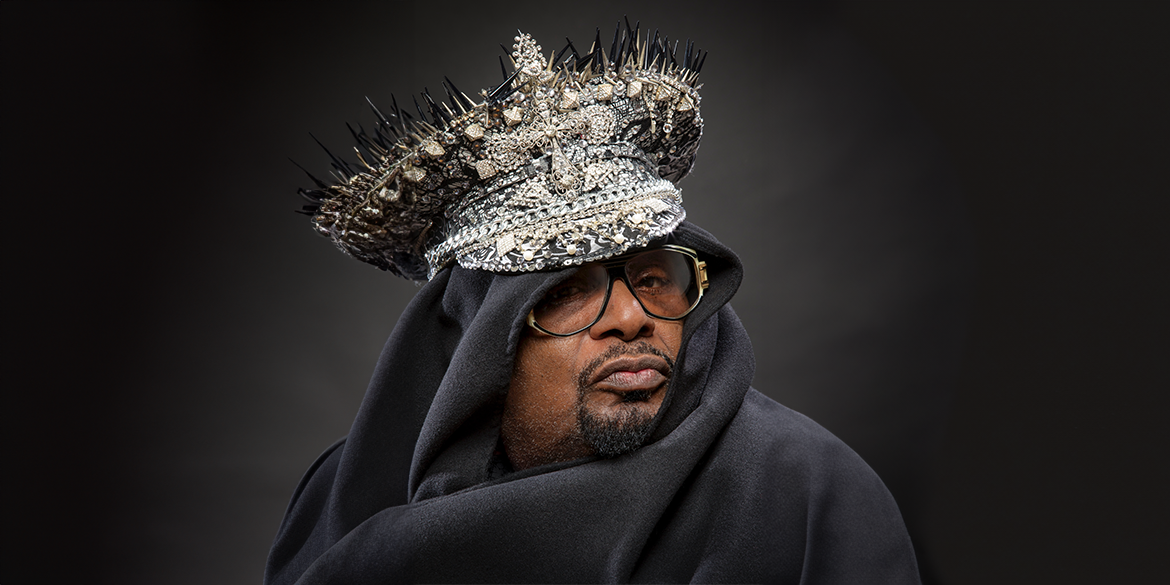

FunkPsychedelic SoulP-FunkRockR&BUSAlate-1960s-1980s, occasional reunions
Funkadelic was the band-centered wing of George Clinton's wider Parliament-Funkadelic universe, a US group that reshaped Black popular music by fusing funk, psychedelic rock, soul, gospel energy and studio experimentation. Although they sit outside the core breakbeat and UK bass continuum, their records became foundational source material for later sampling culture, hip-hop, electro and bass-heavy dance music.
The group emerged at the end of the 1960s from the same Detroit-area vocal and touring network that had previously supported The Parliaments. As Clinton's circle evolved, Funkadelic became the looser, more guitar-driven counterpart to Parliament, with a sound that drew as much from Hendrix-era rock and acid-damaged psychedelia as from deep funk and doo-wop-rooted vocal tradition.
Early personnel around the group included Eddie Hazel, Tawl Ross, Billy Bass Nelson, Mickey Atkins and Tiki Fulwood, with Clinton acting as organizer, conceptual guide and producer. That combination gave Funkadelic a distinctive identity: raw rhythm sections, distorted guitars, extended jams and a surreal, often satirical lyrical world.
Their self-titled debut and the albums that followed quickly established a language unlike most early-1970s funk records. Where many contemporaries emphasized polish or crossover elegance, Funkadelic often sounded heavier, stranger and more open-ended, bringing rock volume and improvisational sprawl into Black dance music without abandoning groove.
Records such as Free Your Mind... and Your Ass Will Follow and Maggot Brain became central to the group's reputation. The latter, in particular, is frequently cited for Eddie Hazel's guitar work and for the way the band balanced cosmic atmosphere, social commentary, humor and musical intensity.
Across the first half of the 1970s, Funkadelic developed a catalog that moved between hard funk, psychedelic balladry, political reflection and absurdist theater. Albums including America Eats Its Young, Cosmic Slop, Standing on the Verge of Getting It On and Let's Take It to the Stage showed how flexible the project could be while remaining recognizably part of Clinton's larger aesthetic system.
That system mattered as much as any single release. Funkadelic was not simply a standalone band but part of a broader collective ecology that also involved Parliament and, later, related projects and satellite acts. The group's mythology, visual language and stage presentation helped define the wider P-Funk world as a self-contained cultural universe.
By the mid to late 1970s, the music often became tighter and more explicitly dancefloor-oriented without losing its eccentric edge. Tracks such as One Nation Under a Groove and later material from the same period connected the band's earlier psychedelic freedom to a more streamlined funk attack that proved hugely influential across club, radio and party culture.
Funkadelic's impact extends far beyond the original albums. Their grooves, basslines, drum breaks, chants and guitar phrases were heavily mined by hip-hop producers, G-funk architects, sample-based beatmakers and DJs working across electro, breaks and bass music. In that sense, the group occupies an important prehistory for many scenes covered by a breakbeat-focused archive.
The band's work also helped normalize a broader idea of what funk could contain: rock distortion, conceptual album structures, social critique, erotic humor, gospel uplift and avant-garde collage. That openness fed directly into later Black experimental traditions and into dance music cultures that treated the studio as a space for world-building rather than simple songcraft.
Lineups shifted repeatedly, as was common within the Parliament-Funkadelic orbit, and the group's classic period is generally associated with the run from the late 1960s into the early 1980s. Legal, organizational and industry complications affected how the various P-Funk identities operated, but the Funkadelic name retained major symbolic weight.
Reissues, reunions and continuing critical reassessment have kept the catalog active for new generations. For listeners coming from breakbeat, jungle, UK garage or bass, Funkadelic is less a direct scene name than a deep root source: a group whose rhythmic force, low-end imagination and sample legacy continue to echo through modern club music.
Within American music history, Funkadelic stands as one of the key collective projects to dissolve boundaries between funk and rock while preserving a specifically Black, communal and futurist vision. Their records remain essential not only as albums of their era, but as durable building blocks in the longer history of groove-based music.
ESSENTIAL TRACKS
Maggot Brain
Cosmic Slop
Standing on the Verge of Getting It On
One Nation Under a Groove
Can You Get to That
Hit It and Quit It
KEY RELEASES
Funkadelic (1970)
Debut album
Free Your Mind... and Your Ass Will Follow (1970)
Maggot Brain (1971)
One of the group's most cited albums
America Eats Its Young (1972)
Cosmic Slop (1973)
Standing on the Verge of Getting It On (1974)
Let's Take It to the Stage (1975)
One Nation Under a Groove (1978)
Major late-1970s statement
RELATED ARTISTS
