LOADING BREAKS...
← Back to Artists

BreaksBassFunkGlitch HopElectro SwingUK2010s-present
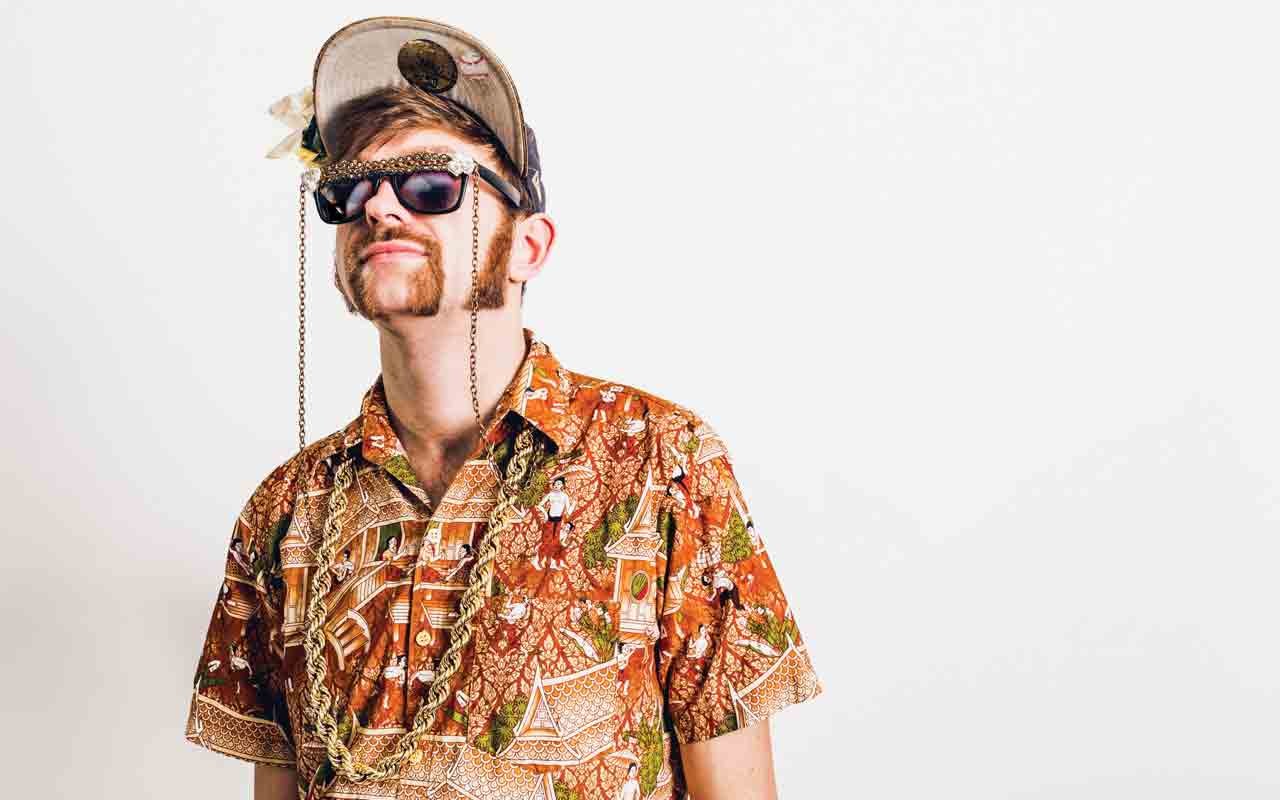
Father Funk is a contemporary producer and DJ associated with the UK bass continuum, particularly the crossover zone where breakbeat, funk, glitch hop and party-focused bass music meet. His work is widely identified by a heavy use of funk samples, elastic low end and a bright, high-impact approach built for festival systems as much as club floors.
Although some web sources describe him in different ways, he is generally linked to Bristol and to the broader British bass ecosystem that has long encouraged hybrid forms between breaks, dubwise pressure, hip-hop swing and rave energy. That setting helps explain why his catalogue often resists narrow genre labels.
Under the Father Funk name, he developed a sound that updates crate-digging funk sensibilities for a digital bass audience. Rather than treating funk as retro ornament, his productions tend to push it into louder, more compressed and more aggressively dancefloor-oriented territory, often with a clear emphasis on drops, edits and crowd response.
His rise appears to have come through online circulation, independent releases and support from labels and platforms active in the global breaks and bass network. In that context, Father Funk became a familiar name to listeners moving between breakbeat, glitch hop, midtempo bass and sample-heavy festival music.
A number of releases helped define that profile, with titles such as Funkstep and Legend of the Rent frequently cited among his better-known work. Those records point to a producer comfortable with humour, irreverence and pop-cultural reference, but also committed to detailed rhythmic programming and a strong sense of momentum.
The Father Funk catalogue is often discussed alongside labels such as Breakbeat Paradise and Render Recordings, both of which fit the modern funk-and-breaks circuit that connects DJs, boutique labels and online communities across the UK, Europe and North America. That network has been important to the visibility of artists working outside stricter genre orthodoxies.
Stylistically, his productions sit at an intersection: breakbeat sequencing, bass-music weight, funk phrasing and the maximalist dynamics associated with festival culture. At times the music leans toward glitch hop or electro-funk; elsewhere it moves closer to breaks or broader bass hybrids. The continuity lies less in one tempo than in a recognisable production attitude.
He is also known as a visible educator and online music-production personality, using video platforms to discuss process, technique and studio workflow. That side of his activity has helped extend his profile beyond DJ and producer circles into a wider community of aspiring beatmakers and bass producers.
As a performer, Father Funk has been associated with the international circuit that links club bookings, bass festivals and crossover events rather than one narrowly defined local scene. His music is designed for direct physical impact, and that emphasis on live crowd energy has remained central to how the project is presented.
Later work has continued to frame him as an artist interested in keeping funk mutable rather than archival. The language around his releases often stresses reinvention, collision and resistance to genre boundaries, which is consistent with the way his tracks combine old-school source material with contemporary sound design.
Within the wider breakbeat and bass landscape, Father Funk occupies a recognisable niche: not a foundational first-wave figure, but a durable modern name in the sample-driven, funk-forward end of the scene. His significance lies in helping sustain a strand of bass music that values groove, humour and rave functionality in equal measure.
For Optimal Breaks, he is best understood as part of the post-2000s generation that kept breakbeat-adjacent music open to funk, mash-up logic and festival-scale bass pressure. His catalogue speaks to a period when genre borders became more porous, and when independent digital circulation allowed hybrid artists to build committed international followings.
ESSENTIAL TRACKS
Legend of the Rent
10 Toes Down
Don't Stop
KEY RELEASES
Funkstep (2013)
Early album-length release associated with his bass-funk crossover sound
Legend of the Rent (2018)
One of his most widely cited releases
Funk The System (2024)
Later album framed around a punk-funk and bass hybrid approach
RELATED ARTISTS


LINKS
youtube →