LOADING BREAKS...
← Back to Artists

Drum & BassDrumstepNeurofunkBassBreaksES2009-present
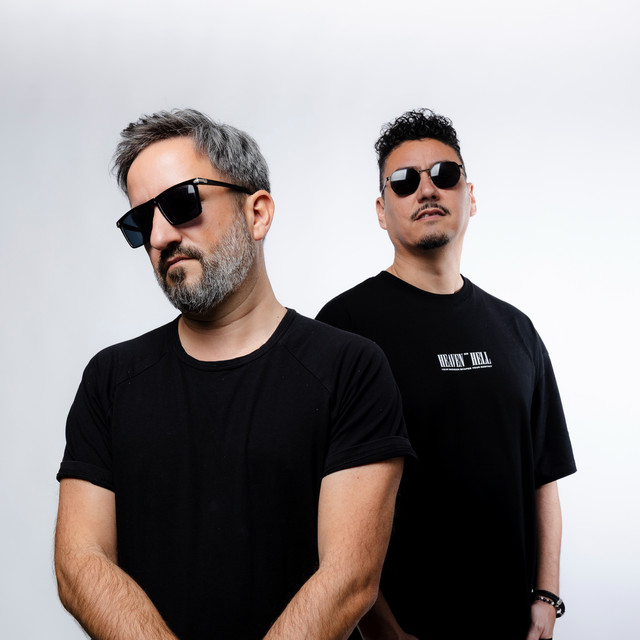
Dub Elements is a Spanish duo associated above all with drum & bass, drumstep and the heavier end of bass music. Within the Iberian context they stand out as one of the projects that helped connect the long-running Spanish breakbeat tradition with international D&B circuits during the late 2000s and 2010s.
The project is generally identified with Antonio Cano and Jose Luis Vazquez. They emerged in 2009, a moment when Spanish bass music was increasingly visible beyond local club networks, and when producers from scenes such as Andalusian breakbeat were beginning to move more decisively into global drum & bass and cross-bass territory.
Their early impact came through a sound built for pressure: hard-edged drums, forceful low end and a taste for dramatic drops that could work equally well in breakbeat-oriented environments and in heavier D&B sets. That hybrid instinct became one of the duo's defining traits.
Rather than approaching drum & bass from a purely orthodox UK angle, Dub Elements developed a style that reflected the energy of Spanish dance floors. Their productions often leaned toward drumstep, neurofunk-adjacent aggression and festival-scale dynamics, while still retaining a direct, club-functional sensibility.
As their profile grew, they became associated with labels and platforms operating in the harder and more technical zones of contemporary bass music. Their catalogue circulated through international DJ networks, helping place a Spanish act inside conversations usually dominated by UK and Central European names.
A key part of their identity has been versatility across tempos and adjacent styles. Even when framed primarily as a drum & bass act, Dub Elements have remained legible to audiences coming from breaks and bassline-driven club culture, which helps explain their crossover appeal in Spain.
Releases such as Beat the Drum Hard helped establish their name in the wider bass scene. The title itself captures an important aspect of the project: rhythm as impact, physicality and crowd response rather than studio abstraction.
Later work, including the Point of Origin series, suggested a more developed long-form identity and a clearer sense of authorship within modern bass music. These releases reinforced the idea that Dub Elements were not simply occasional crossover producers, but a sustained duo with a recognisable sound world.
Their presence on labels such as PRSPCT and Eatbrain placed them in orbit with some of the more forceful strains of contemporary drum & bass. That context matters, because it situates the duo within an international network of hard, technical and high-intensity bass music rather than only within a local Spanish frame.
Alongside releases, DJ and mix activity has also been central to their profile. Their sets are commonly understood as high-energy sessions shaped for impact, reflecting the same emphasis on weight and momentum that defines their productions.
In scene terms, Dub Elements belong to a generation that broadened the map for Spanish bass artists. They arrived after the first great wave of UK breakbeat influence in Spain, but helped show that producers from that ecosystem could operate credibly in global drum & bass and drumstep conversations.
Their significance therefore lies not only in individual tracks, but in what they represent culturally: a bridge between Andalusian and Spanish bass traditions, the internationalisation of local club energy, and the continued dialogue between breaks, D&B and harder contemporary bass forms.
Over time, that has given Dub Elements a durable place in the story of Spanish bass music. They are best understood as a duo who translated regional dance-floor intensity into a language legible to the wider drum & bass world, without fully severing ties to the breakbeat-rooted environment from which they emerged.
ESSENTIAL TRACKS
Beat the Drum Hard
Dios te odia
KEY RELEASES
Beat the Drum Hard (2012)
Widely cited among their early defining releases.
Dios te odia (2014)
Representative of their harder bass and drumstep-facing period.
Point of Origin, Vol. 2 (2023)
Part of a later series that consolidated their modern sound.
Point of Origin, Vol. 3 (2024)
Continued the Point of Origin series.
RELATED ARTISTS
S.P.Y.