LOADING BREAKS...
← Back to Artists

BreaksBassElectroTechnoTrip HopUKlate-1990s-present
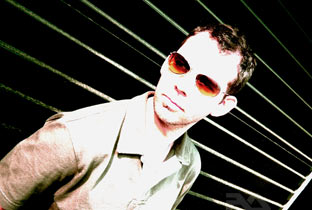
BLIM is the long-running alias of UK producer and DJ Gervase Cooke, a figure associated with the more adventurous edges of British breakbeat and bass culture. Across his catalogue and DJ work, he has moved between broken-beat club music, electro, techno pressure and downtempo textures without settling into a single formula.
He emerged from a period when UK dance music was fragmenting into multiple hybrid forms, and his work reflects that environment: part breakbeat science, part soundsystem weight, part studio experimentation. Rather than belonging neatly to one micro-scene, BLIM is better understood as one of those producers who connected several adjacent ones.
Early descriptions of his trajectory often stress stylistic range, and that remains central to his profile. His productions have been linked to breakbeat, bass-heavy electronics and darker, more cinematic strands of club music, with an approach that favours detail, pressure and movement over easy genre branding.
That flexibility helped him build a reputation in specialist DJ circuits and among listeners interested in the overlap between breaks, electro and leftfield dance music. He was part of a generation for whom club functionality and headphone depth did not need to be opposites.
One of the key reference points in his discography is Lost In Music, an album-length statement from the early 2000s that is regularly cited when discussing his work. It captures the breadth of his approach, drawing together rhythmic experimentation, bass weight and a taste for moodier electronic atmospheres.
Other titles associated with BLIM include Wired for Sound, Fear and Loathing and Tectonics, releases that point to a producer comfortable working across formats and shades of intensity. Taken together, they suggest a catalogue built less around one signature trick than around a continuing interest in reshaping club language.
As a DJ, BLIM has also been noted for traversing styles rather than policing boundaries. That quality made sense in the context of UK underground culture, where pirate radio legacies, soundsystem thinking and cross-genre club programming often fed directly into production practice.
His name has circulated in scenes where breakbeat was opening outward into bass music, electro and tougher hybrid forms. In that sense, BLIM belongs to a lineage of artists who helped keep the breakbeat continuum exploratory rather than nostalgic.
What distinguishes his work is not simply eclecticism for its own sake, but a consistent feel for tension, low-end design and rhythmic architecture. Even when the stylistic frame shifts, there is usually a recognisable interest in propulsion, texture and system-ready impact.
Because of that, BLIM occupies a useful place in the wider map of UK underground electronics: not always framed as a mainstream crossover figure, but respected as a producer's producer and a selector with broad technical and stylistic literacy.
His catalogue also speaks to a moment when album projects, 12-inch culture and DJ identity still overlapped in productive ways. BLIM's work sits comfortably in that tradition, where club tracks, listening pieces and hybrid experiments could coexist within the same body of work.
Within a breakbeat-focused archive, BLIM matters as an artist who pushed beyond narrow definitions of the style while retaining its core values: rhythmic invention, bass pressure and a willingness to borrow from neighbouring scenes. His legacy is tied to that restless, open-ended strain of UK dance music.
ESSENTIAL TRACKS
Lost In Music
KEY RELEASES
Lost In Music (2003)
Album
Wired for Sound (2000)
Release associated with his early discography
Fear and Loathing (2001)
Release associated with his early discography
Tectonics (2002)
Release associated with his early discography